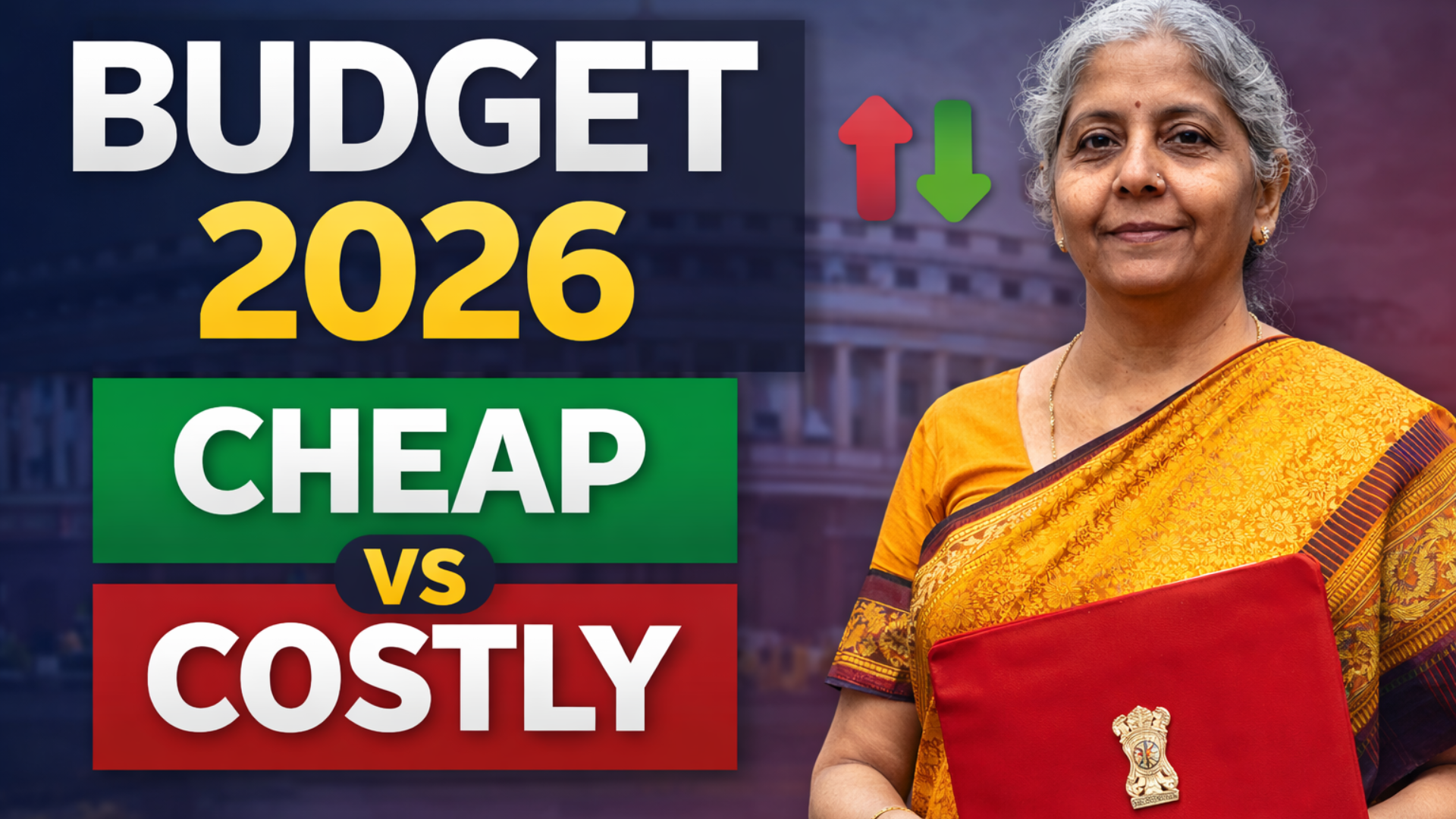
Union Budget 2026 presented by Finance Minister Nirmala Sitharaman has created a lot of discussion across the country. Like every year, this budget focuses on balancing economic growth, controlling inflation, supporting the middle class and boosting key sectors like infrastructure, manufacturing and digital economy. Budget 2026 brings several important changes in taxes, subsidies and duties that directly impact the daily life of common people.
Union Budget 2026
Budget 2026: Vision and Key Focus Areas
Nirmala Sitharaman’s Budget 2026 focuses strongly on economic stability and long-term growth. The government has continued its push on infrastructure development, job creation and support for startups and MSMEs. Special attention has been given to agriculture, rural development and affordable housing. The budget also highlights digital India, green energy and manufacturing under the “Make in India” initiative.
To control inflation and reduce the burden on common people, the government has adjusted customs duty and GST on several essential and non-essential items. At the same time, higher taxes on luxury and harmful goods have been introduced to increase revenue.
Tax Relief and Middle-Class Benefits
In Budget 2026, the government has tried to provide some relief to the salaried class and middle-income groups. Changes in income tax slabs and increased standard deduction are expected to leave more money in the hands of taxpayers. This move aims to boost spending and consumption in the economy.
Apart from income tax, benefits have also been announced for senior citizens and small investors. Simplification of tax filing and digital services has been another key highlight, making compliance easier for individuals and businesses.
Focus on Infrastructure, Jobs and Growth
A major portion of Budget 2026 is dedicated to infrastructure projects such as highways, railways, metro expansion and smart cities. Increased capital expenditure is expected to generate employment opportunities and support economic growth. The government has also announced schemes to promote skill development and employment for youth.
Manufacturing and export-oriented industries receive support through incentives and policy reforms. These steps aim to strengthen India’s global competitiveness and reduce dependence on imports.
Things That Get Cheaper After Budget 2026
Budget 2026 brings good news for consumers as prices of several essential and commonly used items are expected to go down due to reduced taxes and duties.
Items that may become cheaper include:
Electric vehicles and EV components
Solar panels and green energy equipment
Mobile phone parts and electronic components
Some medicines and healthcare equipment
Affordable housing materials
Agricultural tools and equipment
Certain food processing items
These reductions are expected to promote clean energy, digital growth and affordable healthcare while also helping farmers and the middle class.
Things That Get Costlier After Budget 2026
Along with relief, the budget also increases taxes on certain items to control consumption and increase government revenue. These changes may impact consumer spending on non-essential goods.
Items that may become costlier include:
Cigarettes and tobacco products
Alcohol and luxury beverages
High-end imported cars and bikes
Luxury electronics and gadgets
Gold, silver and precious items
Some imported goods with higher customs duty
The government aims to discourage unnecessary imports and unhealthy consumption while supporting domestic manufacturing.
Impact on Common People and Businesses
For common people, Budget 2026 offers a mixed impact. While essentials and future-focused products become cheaper, luxury items may cost more. Tax relief and job-focused spending are positive steps for middle-class families. For businesses, especially startups and MSMEs, improved credit access and simplified regulations provide growth opportunities.
Overall, the budget tries to maintain a balance between welfare and development. By focusing on infrastructure, green energy and digital economy, Budget 2026 sets the foundation for sustainable growth.
Nirmala Sitharaman’s Budget 2026 is growth-oriented with a clear focus on long-term development. It supports the middle class, promotes clean energy and strengthens infrastructure while ensuring fiscal discipline. Although some items become costlier, the relief on essential goods and future technologies makes this budget beneficial for a large section of society. Budget 2026 clearly shows the government’s intention to move India towards a stronger, greener and more self-reliant economy.