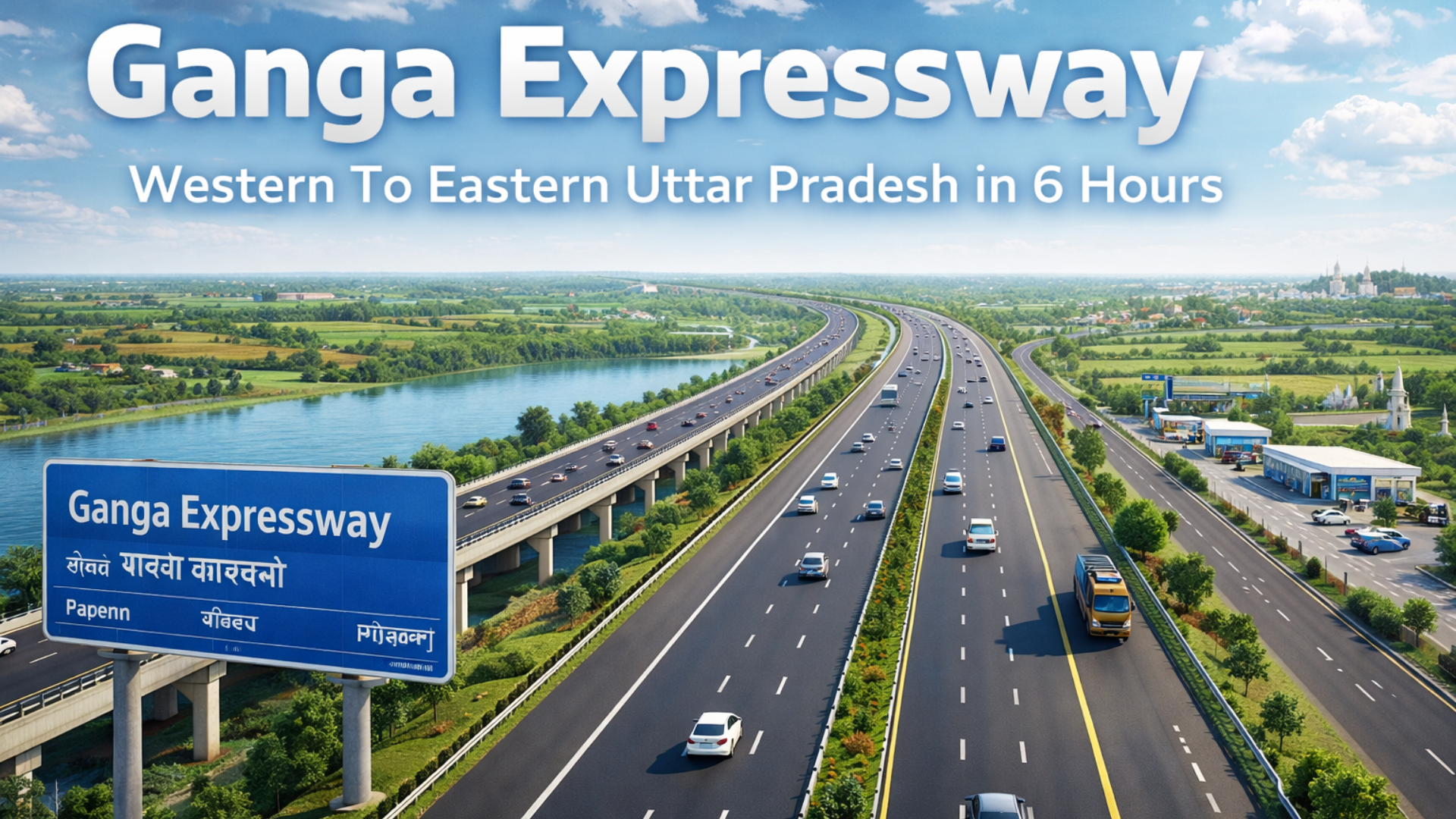
The Ganga Expressway is one of the biggest and most ambitious highway projects in India, designed to improve connectivity, boost economic development, and reduce travel time across major cities of Uttar Pradesh. This mega infrastructure project has created huge excitement since its announcement because it promises smooth driving, modern facilities, and faster transportation. Just like a premium upgrade in connectivity, the Ganga Expressway is expected to transform road travel in North India.
The Ganga Expressway
Route, Length and Connectivity Details
The Ganga Expressway is a greenfield access-controlled expressway that will connect Meerut in western Uttar Pradesh to Prayagraj in eastern Uttar Pradesh. The total length of the expressway is approximately 594 kilometers, making it one of the longest expressways in India. It will pass through several important districts including Meerut, Hapur, Bulandshahr, Amroha, Sambhal, Badaun, Shahjahanpur, Hardoi, Unnao, Rae Bareli, Pratapgarh, and Prayagraj. The expressway is being developed with the aim of improving connectivity between western and eastern parts of the state. Once completed, the travel time between Meerut and Prayagraj is expected to reduce significantly, making long-distance road journeys much faster and more comfortable.
Project Cost and Development Authority
The Ganga Expressway project is being developed by the Uttar Pradesh Expressways Industrial Development Authority (UPEIDA). The estimated cost of the project is around ₹36,000 crore, making it one of the largest infrastructure investments in the state. The expressway is being constructed under a public-private partnership model to ensure quality construction and timely completion. The foundation stone of the project was laid with a vision to boost economic activity, attract industries, and create employment opportunities in the region. Large construction companies have been awarded contracts for different sections of the expressway to speed up the work.
Road Design, Lanes and Modern Features
The Ganga Expressway is being built as a six-lane expressway initially, with the provision to expand it to eight lanes in the future according to traffic demand. It will be a fully access-controlled highway, which means vehicles can enter and exit only at designated interchanges. This will ensure high-speed travel and improved safety. The expressway will include modern facilities such as service roads, rest areas, petrol pumps, food plazas, emergency medical services, and dedicated spaces for future utilities. High-quality pavement technology is being used to ensure durability and smooth driving experience. Proper drainage systems and safety barriers will also be installed to prevent accidents and waterlogging issues.
Travel Time, Speed Limit and Benefits
One of the biggest advantages of the Ganga Expressway is the reduction in travel time. Currently, traveling from Meerut to Prayagraj by road can take around 10 to 12 hours depending on traffic conditions. After the completion of the expressway, the travel time is expected to reduce to nearly 6 to 7 hours. The design speed of the expressway is expected to be around 120 km per hour, which will allow faster and more efficient movement of vehicles. This improved connectivity will benefit daily commuters, transporters, and businesses. Farmers and small industries located near the route will also gain better access to markets, helping in economic growth.
Employment, Industrial Growth and Economic Impact
The construction of the Ganga Expressway is generating thousands of direct and indirect employment opportunities. From engineers and construction workers to suppliers and transport services, many sectors are benefiting from this mega project. Once operational, the expressway is expected to attract new industries, logistics parks, warehouses, and commercial hubs along its corridor. This will increase land value in nearby areas and encourage real estate development. Improved road connectivity also supports tourism by making religious and historical destinations more accessible to visitors.
Current Construction Status and Expected Completion
The construction work of the Ganga Expressway is progressing in multiple phases across different districts. Heavy machinery, large workforce, and advanced construction techniques are being used to ensure timely progress. The government has set a target to complete the project within the planned timeline so that the public can start using it as soon as possible. Land acquisition for most sections has been completed, and groundwork including soil testing, leveling, and bridge construction is ongoing. Once completed, the Ganga Expressway will become a major milestone in India’s road infrastructure development.
Why Ganga Expressway Is a Game Changer for Uttar Pradesh
The Ganga Expressway is not just a road project; it is a development corridor that will transform the economy of Uttar Pradesh. With faster transportation, improved logistics, and better connectivity between western and eastern regions, the expressway will play a key role in the state’s growth story. It will reduce traffic pressure on existing highways and provide a safer, smoother travel experience. With a massive investment, modern design, and long-term expansion plans, the Ganga Expressway is set to become one of the most important expressways in India, opening new doors for development and progress.