
Budget 2026 has been officially announced by the Finance Minister, and as always, it has brought big changes that directly impact the daily life of common people. From household items to fuel, electronics, vehicles, and essential services, many things have either become cheaper or more expensive after the new budget decisions. The main focus of Budget 2026 is to control inflation, boost economic growth, support middle-class families, and increase government revenue. In this article, we will clearly explain what items became cheaper, what became costlier, and how these changes will affect your pocket.
Budget 2026
Items That Became Cheaper After Budget 2026
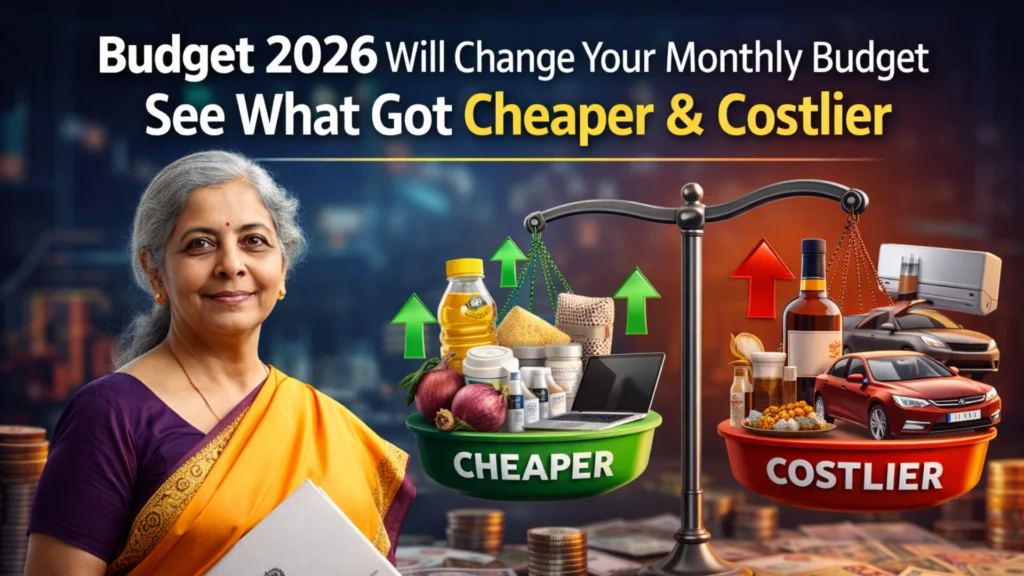
After the announcement of Budget 2026, the government reduced taxes and import duties on several essential and consumer goods. This step was taken to reduce inflation and provide relief to the middle and lower-income groups. Some food items, daily-use products, and raw materials used in manufacturing have become cheaper. Reduction in customs duty on edible oils, pulses, and certain grains is expected to bring down grocery expenses. In addition, some life-saving medicines and medical equipment have also become cheaper, which will benefit patients and hospitals across the country.
Electronics and Technology Products Price Changes
In Budget 2026, the government announced duty cuts on some electronic components and semiconductor-related items. Due to this, smartphones, laptops, and other electronic gadgets may become slightly cheaper in the coming months. Electric vehicle components and batteries have also received tax benefits, which can reduce the overall cost of EVs. This move supports the government’s goal of promoting digital India and clean energy adoption. However, not all electronic products will see a big price drop, as some finished imported goods still attract higher duties.
What Became More Expensive in Budget 2026
Along with price cuts, Budget 2026 has also increased taxes on certain items to balance revenue and control consumption. Luxury goods such as high-end cars, imported watches, premium cosmetics, and luxury electronics have become more expensive. Higher taxes have been imposed on tobacco products, cigarettes, and alcohol to discourage harmful consumption and increase government income. These price hikes will mainly affect people who spend on non-essential and luxury items.
Fuel, Transport and Travel Impact
Fuel prices are always a major concern, and Budget 2026 has brought mixed news. While no major tax relief was given on petrol and diesel, additional green cess on fossil fuels may slightly increase fuel prices. This can impact transportation and logistics costs, which may indirectly affect prices of goods. On the positive side, electric vehicles, public transport projects, and railway infrastructure received strong support. This may improve travel facilities and reduce long-term transport costs.
Tax Changes for Common People
Budget 2026 also introduced changes in personal income tax slabs and deductions. The Finance Minister announced relief for middle-class taxpayers by increasing standard deductions and simplifying tax filing. This means salaried individuals may save more money despite rising expenses. However, higher-income groups may see limited benefits as surcharge rules remain strict. These tax changes aim to increase disposable income and boost spending in the economy.
Impact on Farmers and Rural Economy
The rural and agricultural sector received special attention in Budget 2026. Subsidies on fertilizers, seeds, and farming equipment have been increased, making farming inputs cheaper. This will help farmers reduce costs and improve productivity. The government also announced higher investment in irrigation, storage, and rural infrastructure. These steps may not directly reduce prices immediately but will strengthen the rural economy in the long run.
Education and Healthcare Costs
In Budget 2026, education and healthcare sectors saw positive announcements. Import duty reduction on medical devices and equipment has made healthcare services more affordable. Some educational services and digital learning tools also received tax exemptions, which may reduce education-related expenses for students. At the same time, private premium healthcare and international education services may become more expensive due to higher service taxes.
Final Summary: How Budget 2026 Affects You
Overall, Budget 2026 has a balanced approach where essential items, medicines, and technology inputs have become cheaper, while luxury goods, fuel-related costs, and harmful products have become more expensive. The Finance Minister’s announcements aim to protect common people, promote sustainable growth, and strengthen the economy. Whether this budget benefits you or not depends on your spending habits, income level, and lifestyle. Staying informed about these changes will help you plan your finances better in the coming year.