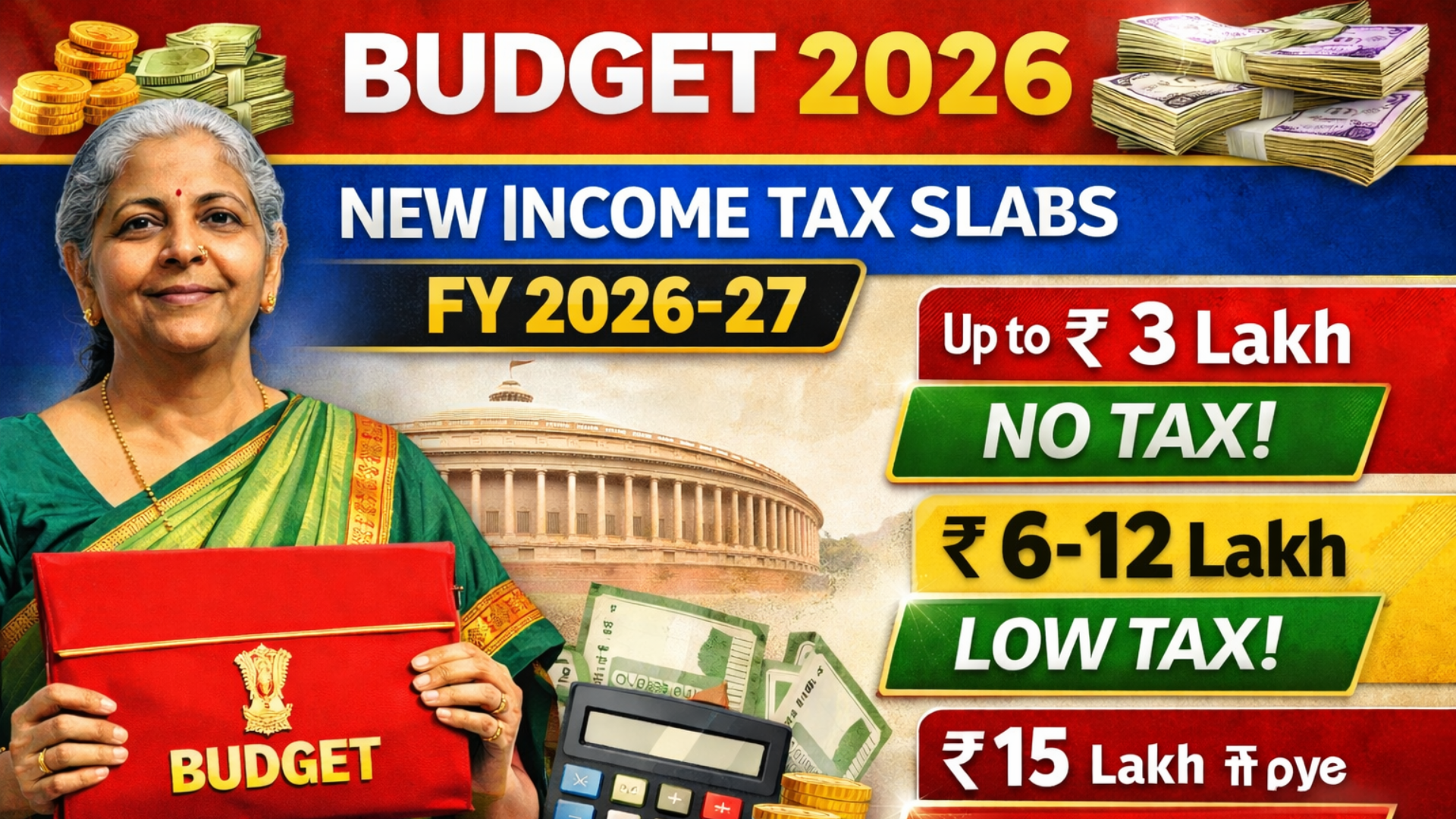
The Union Budget 2026 has brought a lot of attention, especially from salaried employees and middle-class families. One of the biggest highlights of Budget 2026 is the revision in the income tax slab rates for FY 2026-27. The government’s main aim is to simplify taxation, increase disposable income, and encourage savings and spending.
Budget 2026
New Income Tax Slab Structure for FY 2026-27
As per Budget 2026 announcements, the government continues to promote the new tax regime by offering clearer and more evenly distributed slab rates. The revised income tax slabs for FY 2026-27 are designed to reduce tax burden on low and middle-income groups while keeping higher earners under a progressive tax system. Under the new structure, income is taxed in steps, which means you only pay higher tax on income that crosses a particular slab.
Income Up to ₹3 Lakh Gets Full Tax Exemption
Under the new income tax slab for FY 2026-27, individuals earning up to ₹3 lakh per year do not have to pay any income tax. This is a big relief for entry-level professionals, small business owners, and young earners. The zero-tax slab ensures that basic income required for living expenses remains tax-free, helping individuals manage inflation and daily costs more comfortably.
Lower Tax Rate on Income Between ₹3 Lakh and ₹6 Lakh
For taxpayers earning between ₹3 lakh and ₹6 lakh, a 5% tax rate is applicable. This slab directly benefits the lower-middle-income group. Compared to older tax structures, this rate is simpler and easier to calculate. It also encourages people to move towards the new tax regime without worrying too much about complex deductions and exemptions.
Middle-Income Earners Get Balanced Tax Relief
Income between ₹6 lakh and ₹9 lakh is taxed at 10%, while income between ₹9 lakh and ₹12 lakh attracts a 15% tax rate under the new income tax slab for FY 2026-27. These slabs are designed keeping salaried professionals and self-employed individuals in mind. The gradual increase in tax rate ensures that tax pressure does not suddenly jump, making financial planning smoother across income levels.
Higher Income Slabs Remain Progressive
For individuals earning between ₹12 lakh and ₹15 lakh, the tax rate is 20%, and for income above ₹15 lakh, the tax rate remains 30%. The government has kept higher slabs unchanged to maintain balance in revenue collection. While high-income earners continue to pay more tax, the structured slabs still make the system predictable and transparent.
Focus on Simplicity Over Deductions
One major feature of Budget 2026 income tax changes is the continued focus on simplicity. The new tax regime offers lower slab rates but fewer deductions like 80C, HRA, and LTA. This makes tax filing easier and reduces dependency on tax-saving investments. Taxpayers who prefer hassle-free filing may find the new slabs more attractive for FY 2026-27.
What Budget 2026 Means for Common Taxpayers
Overall, the new income tax slab rates for FY 2026-27 aim to put more money in the hands of taxpayers. With lower rates for middle income and zero tax for low income, people may have higher take-home salaries. This can boost consumption, savings, and overall economic growth. Before choosing between the old and new tax regime, taxpayers should carefully compare benefits based on their income and investment habits.
Budget 2026 clearly signals the government’s intent to create a simple, growth-friendly tax system that supports both individuals and the economy in the long run.